How to Communicate With a Loved One Living With Dementia
Communication changes as dementia progresses. These strategies help families stay connected and reduce frustration for everyone.
Communication is one of the biggest challenges families face when a loved one has dementia. As the condition progresses, the person may struggle to find words, follow conversations, or understand what is being said. This can lead to frustration for both the person with dementia and the family member trying to communicate.
The Alzheimer's Association offers communication strategies that can help. This article adapts those strategies for families providing care at home.
How Dementia Affects Communication
Dementia affects communication in several ways:
- ✓Word-finding difficulty. The person may pause, use vague words like "thing" or "that," or substitute incorrect words.
- ✓Difficulty following conversations. Especially in groups, with background noise, or when multiple people are talking.
- ✓Problems with comprehension. The person may not understand complex sentences, abstract concepts, or instructions with multiple steps.
- ✓Repetition. They may ask the same question or tell the same story repeatedly.
- ✓Loss of reading and writing ability. In later stages, they may lose the ability to read or write.
- ✓Nonverbal communication becomes more important. As words become harder, tone of voice, facial expression, and touch carry more meaning.
General Principles
Be Patient
Give your loved one time to process what you said and to respond. Do not rush them or finish their sentences for them unless they are clearly frustrated and want help.
Keep It Simple
Use short, simple sentences. Ask one question at a time. Give one instruction at a time. If you need to explain something, break it into small steps.
Reduce Distractions
Turn off the TV or radio before starting a conversation. Move to a quiet room. Background noise makes it much harder for someone with dementia to focus.
Get Their Attention
Before speaking, make eye contact. Say their name. Wait until they are looking at you before you start talking. Touch their hand or arm gently to get their attention if needed.
Specific Strategies
Ask Yes or No Questions
Instead of open-ended questions like "What would you like for lunch?" try "Would you like a sandwich or soup?" Better yet, offer two choices: "Would you like soup?" If that does not work, try "Would you like to eat now?"
Avoid Correction
If your loved one says something that is not accurate, do not correct them. Correcting causes frustration and can damage the relationship. Instead, acknowledge what they said and redirect.
For example, if they say "I need to call my mother" (and their mother has passed away), do not say "Your mother died years ago." Instead, say "Tell me about your mother" or "Your mother was a wonderful person, wasn't she?"
Use Validation
Validation means acknowledging the emotion behind what the person is saying, even if the facts are wrong. If your loved one says "I need to go home, my children are waiting for me," they may be feeling anxious or wanting to feel useful. You can say "You love your children very much, don't you? Tell me about them."
Redirect
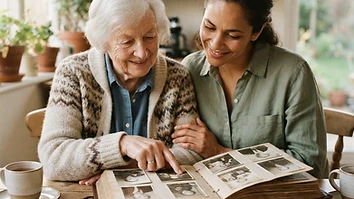
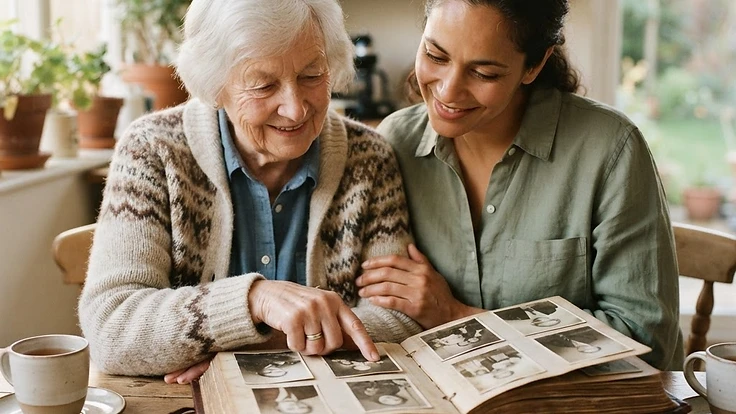
When a conversation becomes repetitive or distressing, gently redirect to a different topic or activity. "That sounds like it was a wonderful trip. Speaking of trips, would you like to look at some photos from our family vacation?"
Use Nonverbal Communication
As dementia progresses, nonverbal communication becomes increasingly important:
- ✓Smile and maintain a warm expression
- ✓Use a calm, reassuring tone of voice
- ✓Use gentle touch: hold their hand, pat their shoulder
- ✓Use gestures to support words: point to objects, demonstrate actions
Don't Argue
You will not win an argument with someone who has dementia. Their reality is different from yours, and trying to force them into your reality only causes distress. If they believe something that is not true, let it go unless it is a safety issue.
Don't Test
Avoid asking "Do you remember?" questions. "Do you remember what we had for breakfast?" can make the person feel embarrassed if they do not know. Instead, say "We had eggs and toast for breakfast, and they were delicious."
Don't Talk Down
Speak to your loved one as an adult, not a child. Use a normal adult tone of voice. Do not use baby talk or diminutives. Your loved one is an adult with a lifetime of experience, even if their cognitive abilities have changed.
Communicating About Care
When helping with personal care:
- ✓Tell your loved one what you are going to do before you do it: "I am going to help you wash your hands now."
- ✓Use simple, concrete language: "Put your arm here" while pointing, rather than "Please position your arm on the armrest."
- ✓Give one instruction at a time and wait for it to be completed before giving the next one
- ✓Offer choices when possible: "Would you like to wear the blue shirt or the green one?"
When Communication Becomes Very Difficult
In the later stages of dementia, verbal communication may become very limited. At this point:
- ✓Focus on nonverbal communication: touch, tone of voice, facial expression
- ✓Play music they love. Music is processed in a different part of the brain and may remain accessible even when speech is lost.
- ✓Read to them from a favorite book or the newspaper
- ✓Sit quietly together. Sometimes presence is enough.
When to Seek Help
If communication has become a source of frustration for you or your loved one, a caregiver trained in dementia communication can help. They can take on the more challenging interactions, like bathing and dressing, while family members focus on connection and companionship.
For more on this, see our article on when dementia caregivers need more help.
A Final Note
The goal of communication is not to exchange information perfectly. It is to maintain connection. Your loved one may not remember what you said, but they will remember how you made them feel. Patience, warmth, and respect matter more than getting the words right.
If you would like help caring for a loved one with dementia, Healthy at Home offers a free care assessment. Our dementia-trained caregivers can help.
Healthy at Home Caregivers
Educational resource for families and caregivers
Could your loved one use more support at home?
Healthy at Home provides personalized non-medical home care designed around your family's schedule and needs.
Learn About Home CareNeed more support at home?
Every family's situation is different. Healthy at Home can help you understand your options and build a care plan that fits your loved one's needs.
Prefer to talk? Call (949) 340-2617