Early Signs of Dementia Families May Notice at Home
Recognizing early signs of dementia can lead to earlier medical evaluation and better planning. This article describes common signs and what to do next.
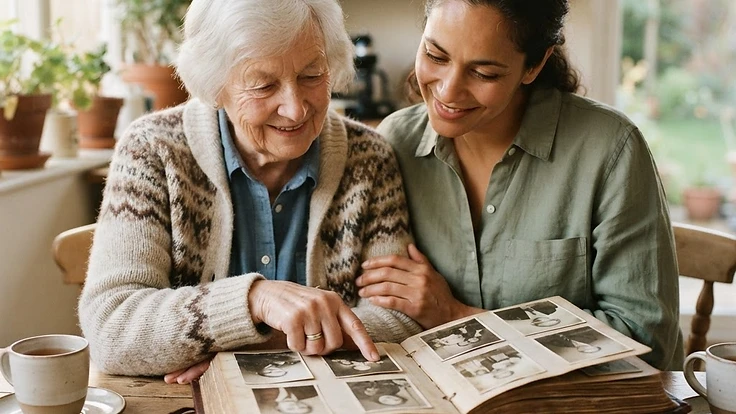
Noticing changes in a parent or spouse can be unsettling. Sometimes the changes are subtle: a forgotten appointment, a misplaced key, a repeated question. Other times they are more noticeable: getting lost in a familiar place or leaving the stove on.
This article describes early signs of dementia that families may notice at home. It is important to understand that these signs can have many causes, and only a doctor can make a diagnosis. If you notice these signs, the next step is to schedule a medical evaluation.
Why Early Recognition Matters
Recognizing dementia early has several benefits:
- ✓Medical evaluation can identify treatable causes. Some symptoms that look like dementia, such as vitamin deficiencies, thyroid problems, medication side effects, or depression, are treatable and reversible.
- ✓Planning can begin sooner. Early diagnosis gives families time to plan for care, finances, and legal matters while the person can still participate in decisions.
- ✓Treatment can start earlier. While there is no cure for most types of dementia, some medications can help with symptoms, especially when started early.
- ✓Lifestyle changes can help. Exercise, social engagement, and cognitive stimulation may help maintain function longer.
Memory Changes
Memory loss is the most recognized early sign. Watch for:
- ✓Forgetting recent events or conversations and not remembering them later
- ✓Repeating the same questions or stories within a short period
- ✓Relying heavily on notes or family members for things they used to handle independently
- ✓Forgetting important dates or appointments
- ✓Misplacing items in unusual places, like keys in the refrigerator
Some forgetfulness is a normal part of aging. The difference is whether the forgetfulness disrupts daily life. Forgetting where you parked your car is normal. Forgetting what a car is for is not.
Difficulty With Familiar Tasks
A person with early dementia may struggle with tasks they have done many times:
- ✓Following a familiar recipe but getting confused about steps
- ✓Managing a budget and making uncharacteristic errors
- ✓Driving to a familiar place and getting lost
- ✓Using a phone, remote control, or appliance they have used for years
- ✓Playing a game they know well and forgetting the rules
Language and Communication Changes
Early dementia can affect language:
- ✓Pausing to find the right word in the middle of a sentence
- ✓Using vague words like "thing" or "that" instead of specific names
- ✓Struggling to follow a conversation, especially in groups
- ✓Reverting to a first language if English is not their first language
- ✓Writing or saying things that do not quite make sense
Disorientation
Confusion about time and place is an important sign:
- ✓Losing track of the day, date, or season
- ✓Being confused about where they are, even in a familiar place
- ✓Having trouble understanding that an event is not happening now, such as expecting a deceased parent to visit
- ✓Getting lost while walking or driving in a familiar area
Judgment and Decision-Making
Early dementia can affect judgment:
- ✓Falling for scams or telemarketing that they would have recognized before
- ✓Making unusual financial decisions, like large donations or purchases
- ✓Wearing inappropriate clothing for the weather
- ✓Neglecting personal hygiene or home maintenance
- ✓Showing poor judgment about safety, like leaving doors unlocked
Mood and Personality Changes
Dementia can change how a person feels and acts:
- ✓Becoming withdrawn or socially isolated
- ✓Appearing anxious, depressed, or irritable
- ✓Losing interest in hobbies or activities they used to enjoy
- ✓Becoming suspicious or paranoid, such as accusing people of stealing
- ✓Showing less emotion than usual or reacting in unexpected ways
These changes can be subtle and may be attributed to stress, aging, or other causes. But if they represent a change from your loved one's usual personality, they are worth discussing with a doctor.
What These Signs May Mean
It is important to understand that these signs do not necessarily mean dementia. They can also be caused by:
- ✓Vitamin B12 deficiency
- ✓Thyroid problems
- ✓Medication side effects or interactions
- ✓Depression
- ✓Infections, including urinary tract infections
- ✓Sleep disorders
- ✓Hearing or vision loss
Many of these conditions are treatable. A medical evaluation is the only way to know what is causing the changes.
What to Do If You Notice These Signs
- ✓
Schedule a doctor's appointment. Start with the primary care doctor, who can do an initial assessment and refer to a specialist if needed. A neurologist, geriatrician, or memory clinic can provide a more detailed evaluation.
- ✓
Document what you are seeing. Write down specific examples of changes you have noticed. This helps the doctor understand the pattern.
- ✓
Be honest with your loved one. Express concern, not alarm. "I have noticed you seem to be having more trouble with your memory lately, and I want to make sure everything is okay."
- ✓
Go to the appointment if possible. Your observations are valuable. Offer to accompany your loved one or join by phone.
- ✓
Do not try to diagnose. Leave that to the medical professionals. Your role is to share what you have noticed and support the process.
If the Diagnosis Is Dementia
If your loved one is diagnosed with dementia, there is a great deal you can do to help. See our article on understanding dementia: a family guide for a comprehensive overview.
Early planning makes a difference. Legal documents like powers of attorney and advance directives should be completed while your loved one can still participate. Financial planning should begin early. And a care plan can be put in place that adapts as needs change.
If your loved one has dementia and is enrolled in Medi-Cal, the GUIDE program may provide additional support.
A Final Note
This article is educational, not diagnostic. Only a medical professional can diagnose dementia or any other condition. If you are concerned about a loved one, schedule a medical evaluation.
If you would like help caring for a loved one with dementia, Healthy at Home offers a free care assessment. Our dementia-trained caregivers can help.
Healthy at Home Caregivers
Educational resource for families and caregivers
Could your loved one use more support at home?
Healthy at Home provides personalized non-medical home care designed around your family's schedule and needs.
Learn About Home CareNeed more support at home?
Every family's situation is different. Healthy at Home can help you understand your options and build a care plan that fits your loved one's needs.
Prefer to talk? Call (949) 340-2617