How to Know When an Aging Parent Needs Help at Home
Changes in hygiene, food, medication, mobility, housekeeping, and social habits can signal that a parent needs more support. Here is what to watch for and what to do next.
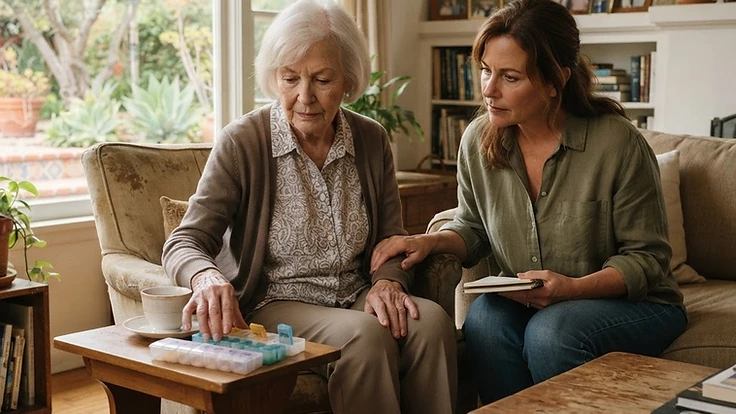
Many families reach a point where they wonder whether a parent is safe living alone. Sometimes the signs appear gradually. A forgotten bill. A bruise on the arm. A refrigerator full of expired food. Other times, a fall or a hospital stay makes the need clear all at once.
This article describes common signs that a parent may need more help at home, and what to do when you notice them.
Changes in Personal Hygiene
Personal care is often one of the first areas to show signs of difficulty. Watch for:
- ✓Wearing the same clothes multiple days in a row
- ✓Body odor or visible decline in grooming
- ✓Skipping baths or showers, or resisting help with bathing
- ✓Unwashed hair or overgrown nails
- ✓Difficulty with toileting or incontinence that goes unmanaged
Bathing can become physically difficult, or it may feel frightening due to fear of falling. Sometimes the issue is modesty or cognitive change rather than physical ability.
Food and Nutrition
Nutrition often declines before families realize it. Signs include:
- ✓The refrigerator full of spoiled or expired food
- ✓Empty cabinets or very little food in the house
- ✓Weight loss that is visible but not discussed
- ✓Relying on snacks or processed food instead of meals
- ✓Forgetting to eat or losing interest in cooking
Poor nutrition can lead to weakness, which increases fall risk. It can also be a sign of depression or cognitive change.
Medication Management
Missed medications or taking the wrong dose can have serious consequences. Watch for:
- ✓Pill bottles that are full when they should be empty
- ✓Confusion about what each medication is for
- ✓Taking medications at the wrong times
- ✓Hoarding or mixing old and new prescriptions
- ✓Resistance to discussing medications
If your parent takes several medications, a pill organizer or a medication reminder system can help. A caregiver can also provide medication reminders as part of a care plan.
Mobility and Movement
Changes in how your parent moves through the home can signal increasing risk. Look for:
- ✓Holding onto furniture or walls while walking
- ✓Difficulty getting up from a chair or the toilet
- ✓Avoiding stairs or moving slowly and cautiously
- ✓Unexplained bruises or signs of falls
- ✓A recent fall, even if no injury occurred
The CDC reports that one in four adults 65 and older falls each year, and falling once doubles the chances of falling again. If your parent has fallen, even if they say they are fine, it is worth taking seriously.
Housekeeping and Home Maintenance
The condition of the home can tell you a lot. Notice whether:
- ✓Clutter is building up or walkways are blocked
- ✓Dishes are piling up in the sink
- ✓Laundry is not being done regularly
- ✓The home is less clean than it used to be
- ✓Mail and bills are piling up unopened
A decline in housekeeping often means that daily tasks have become overwhelming. It can also create safety hazards, especially fall risks from clutter.
Social and Cognitive Changes
Social withdrawal and cognitive changes can be subtle but important. Watch for:
- ✓Stopping activities or hobbies they used to enjoy
- ✓Withdrawing from friends or social events
- ✓Forgetting recent conversations or repeating questions
- ✓Confusion about time, place, or people
- ✓Difficulty following directions or managing finances
Some cognitive changes are a normal part of aging, but significant or rapid changes should be discussed with a doctor. See our article on early signs of dementia for more information.
What to Do When You Notice These Signs
If you notice several of these signs, consider these steps:
- ✓Talk with your parent. Choose a calm moment. Express concern, not criticism. Ask what they are finding difficult and what kind of help they would accept.
- ✓Talk with their doctor. Some changes may have medical causes that can be treated. A medication review can catch side effects or interactions.
- ✓Assess the home. Look for safety hazards that can be addressed quickly, like loose rugs or poor lighting. See our home safety checklist for a room-by-room guide.
- ✓Explore care options. In-home care can help with bathing, meals, medication reminders, and companionship. Starting with a few hours a week is a gentle way to begin.
- ✓Consider a care assessment. A professional assessment can help you understand what level of support fits your parent's needs and your family's situation.
For guidance on having this conversation, see our article on talking to a parent about accepting help.
A Note on Urgency
If you notice signs that suggest an immediate safety risk, such as wandering, severe confusion, repeated falls, or inability to manage medications safely, do not wait. Contact your parent's doctor or a care professional right away.
Recognizing that a parent needs help is not easy. It often comes with mixed emotions: concern, guilt, frustration, and love. The goal is not to take over your parent's life but to help them stay safe and comfortable in the home they want to be in.
If you would like help understanding your options, Healthy at Home offers a free care assessment. We can talk through what you are seeing and help you figure out the next step.
Healthy at Home Caregivers
Educational resource for families and caregivers
Could your loved one use more support at home?
Healthy at Home provides personalized non-medical home care designed around your family's schedule and needs.
Learn About Home CareNeed more support at home?
Every family's situation is different. Healthy at Home can help you understand your options and build a care plan that fits your loved one's needs.
Prefer to talk? Call (949) 340-2617