Fall Prevention at Home: Practical Steps for Older Adults
Falls are the leading cause of injury for older adults, but most are preventable. These practical steps can reduce fall risk at home.
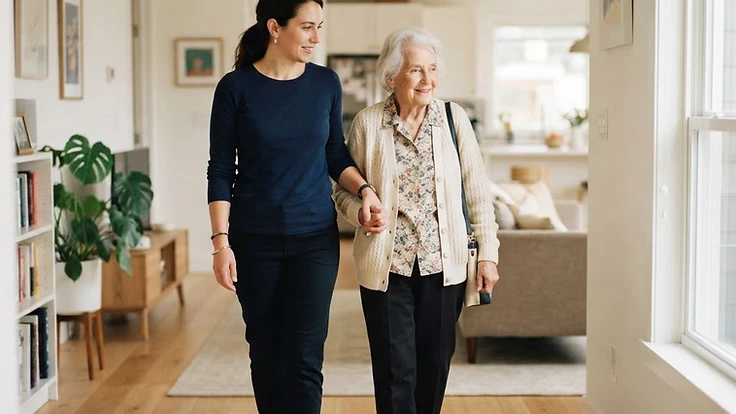
According to the CDC, one in four adults 65 and older falls each year. Falls are the leading cause of injury and injury death in this age group. But falling is not an inevitable part of aging. Most falls are preventable.
This article covers the main factors that contribute to falls and what families can do about each one.
Why Falls Happen
Falls usually result from a combination of factors, not a single cause. The most common include:
- ✓Home hazards like loose rugs, poor lighting, and clutter
- ✓Physical changes like reduced strength, balance, and flexibility
- ✓Medications that cause dizziness, drowsiness, or drops in blood pressure
- ✓Vision changes that make it hard to see obstacles
- ✓Chronic conditions like arthritis, Parkinson's, or neuropathy
- ✓Foot problems like ill-fitting shoes or pain
- ✓Cognitive changes that affect judgment and attention
Addressing several of these factors together is more effective than focusing on just one.
Step 1: Make the Home Safer
Home modifications are the most direct way to reduce fall risk. Start with the highest-risk areas:
- ✓Remove or secure all loose rugs
- ✓Improve lighting in hallways, stairways, and bathrooms
- ✓Install grab bars in the bathroom
- ✓Clear walkways of clutter and cords
- ✓Install night lights along the path from bedroom to bathroom
- ✓Repair uneven floors or loose steps
For a complete room-by-room guide, see our home safety checklist.
Step 2: Stay Active
Regular physical activity is one of the most effective ways to prevent falls. Exercise improves strength, balance, and flexibility, all of which help prevent falls.
The CDC recommends that older adults get at least 150 minutes of moderate-intensity activity per week, plus muscle-strengthening activities at least twice a week. Activities that specifically improve balance, such as tai chi, are especially helpful.
Always talk with a doctor before starting a new exercise routine, especially if your loved one has a chronic condition. A physical therapist can design a program tailored to their abilities and needs.
For more on safe physical activity, see our article on safe physical activity for seniors.
Step 3: Review Medications
Some medications increase fall risk by causing dizziness, drowsiness, or low blood pressure. These include:
- ✓Blood pressure medications
- ✓Sedatives and sleep aids
- ✓Antidepressants
- ✓Some pain medications
- ✓Medications for overactive bladder
Ask your loved one's doctor or pharmacist to review all medications, including over-the-counter ones. They can identify drugs that may increase fall risk and suggest alternatives or dosage adjustments.
A medication review is especially important if your loved one takes four or more medications, which is sometimes called polypharmacy. The more medications a person takes, the higher the risk of side effects and interactions.
Step 4: Check Vision
Vision changes make it harder to see obstacles, stairs, and uneven surfaces. Common age-related vision changes include:
- ✓Reduced depth perception
- ✓Difficulty adjusting to changes in light
- ✓Reduced peripheral vision
- ✓Cataracts, glaucoma, and macular degeneration
Encourage your loved one to have an annual eye exam. Update glasses prescriptions regularly. If your loved one wears bifocals or progressive lenses, they may have difficulty on stairs because the lenses distort depth perception at certain angles. Some eye doctors recommend a separate pair of single-vision glasses for walking and stairs.
Step 5: Wear the Right Shoes
Footwear matters more than most people think. Choose shoes that:
- ✓Fit well and do not slip
- ✓Have a low heel and non-slip sole
- ✓Provide good support
- ✓Fasten securely, not slip-ons
- ✓Are worn both inside and outside the home
Walking in socks or slippers without backs is a common cause of indoor falls. If your loved one prefers slippers, choose ones with non-slip soles and a closed back.
Step 6: Address Foot Problems
Foot pain and foot problems like bunions, corns, and neuropathy can change the way a person walks and increase fall risk. If your loved one has foot pain, a podiatrist can help. Some older adults have difficulty reaching their feet to trim toenails, which can lead to overgrown nails and pain. A caregiver can help with foot care.
Step 7: Use Assistive Devices Correctly
If a doctor has recommended a cane or walker, make sure your loved one uses it correctly. Many people resist using assistive devices, but they can prevent falls and maintain independence.
- ✓Have a physical therapist fit the device and teach proper use
- ✓Check the rubber tips regularly for wear
- ✓Keep the device within reach, not across the room
- ✓Do not rely on furniture for support instead of a cane or walker
Step 8: Be Careful After a Fall
If your loved one has fallen, even if no injury occurred, take it seriously. A fall is a warning sign. The CDC reports that falling once doubles the chances of falling again.
After a fall:
- ✓Talk with their doctor to identify the cause
- ✓Review medications for side effects
- ✓Check the home for hazards that may have contributed
- ✓Consider a physical therapy evaluation for balance and strength
- ✓Think about whether more support at home is needed
When to Seek More Help
If your loved one has fallen more than once, or if you are worried about their safety at home, it may be time for more support. A caregiver can help with mobility, transfers, and household tasks that have become risky. A free care assessment can help you understand what level of support fits.
Falls are not an inevitable part of aging. With the right modifications, exercise, and support, most falls can be prevented.
Healthy at Home Caregivers
Educational resource for families and caregivers
Could your loved one use more support at home?
Healthy at Home provides personalized non-medical home care designed around your family's schedule and needs.
Learn About Home CareNeed more support at home?
Every family's situation is different. Healthy at Home can help you understand your options and build a care plan that fits your loved one's needs.
Prefer to talk? Call (949) 340-2617