Can an Older Adult Safely Live Alone? Questions Families Should Ask
There is no simple answer. These questions help families assess whether a loved one can safely live alone and what support might make it possible.
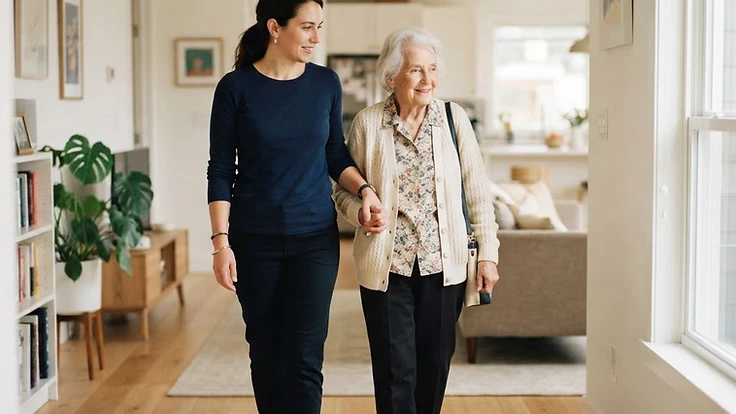
Many families ask whether it is still safe for a parent or spouse to live alone. There is no simple yes or no answer. Safety depends on the person's health, the home, the support available, and how all of those factors may change over time.
This article offers questions to help you think through the decision.
Questions About Health and Physical Ability
- ✓Can your loved one get in and out of bed, a chair, and the bathroom without help?
- ✓Have they fallen in the past year, even if no injury occurred?
- ✓Do they have a chronic condition that could cause a sudden emergency, such as heart disease or diabetes?
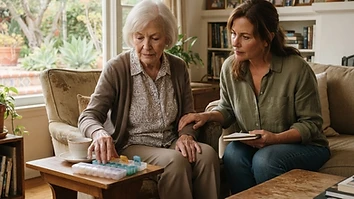
- ✓Are they managing their medications correctly, or have there been missed or doubled doses?
- ✓Has their weight changed significantly, suggesting difficulty with meals?
- ✓Do they have vision or hearing changes that affect their ability to navigate the home safely?
If your loved one has difficulty with any of these, it does not automatically mean they cannot live alone. But it does mean you should think about what support is needed to make living alone safer.
Questions About Cognitive Function
- ✓Do they sometimes forget where they are or what day it is?
- ✓Have they gotten lost in a familiar place?
- ✓Do they leave the stove on, forget to lock doors, or leave water running?
- ✓Have they made decisions that seem unusual or uncharacteristic?
- ✓Have they become vulnerable to scams or fraud?
Cognitive changes are important to assess because they affect judgment and safety. A person may be physically capable but have difficulty recognizing risks. If you notice significant cognitive changes, talk with their doctor. See our article on early signs of dementia for more guidance.
Questions About the Home
- ✓Is the home on one level, or are stairs required?
- ✓Has the bathroom been modified with grab bars and non-slip mats?
- ✓Is the home well-lit, especially in hallways and at the top and bottom of stairs?
- ✓Is the home free of clutter and tripping hazards?
- ✓Is the neighborhood safe and walkable?
- ✓Are there smoke detectors and carbon monoxide detectors that work?
Home modifications can address many safety concerns. See our home safety checklist for a room-by-room guide.
Questions About Support and Connection
- ✓Does someone check in daily, either in person or by phone?
- ✓Are there neighbors or friends nearby who would notice if something was wrong?
- ✓Does your loved one have regular social contact, or are they isolated?
- ✓Are family members close enough to respond in an emergency?
- ✓Does your loved one have a way to call for help if they fall or feel ill?
Social isolation is a significant health risk. The National Institute on Aging has linked loneliness to depression, cognitive decline, and earlier mortality. If your loved one is isolated, regular visits from a caregiver or companion can make a meaningful difference.
Questions About Willingness to Accept Help
- ✓Is your loved one open to having someone come in to help?
- ✓Would they accept a medical alert device or safety modifications?
- ✓Are they willing to stop driving if that becomes necessary?
- ✓Do they recognize any of their own limitations, or do they insist they are fine?
If your loved one is resistant to help, the conversation matters. See our article on talking to a parent about accepting help for strategies.
Making It Work
If you determine that living alone is possible with support, here are steps that can help:
- ✓Start with a safety assessment. Walk through the home and address hazards. Install grab bars, improve lighting, and remove clutter.
- ✓Set up regular check-ins. Arrange for someone to visit or call daily. A caregiver can provide this as part of a care plan.
- ✓Consider a medical alert device. A wearable button that calls for help after a fall provides peace of mind for everyone.
- ✓Start with a few hours of help per week. A caregiver can help with bathing, meals, housekeeping, and companionship. The schedule can grow as needs change.
- ✓Reassess regularly. What works today may not work in six months. Check in every few months to see if the plan still fits.
When Living Alone May Not Be Safe
Living alone may not be safe if your loved one:
- ✓Has fallen more than once and has not made safety changes
- ✓Cannot manage medications safely
- ✓Has significant cognitive impairment that affects judgment
- ✓Wanders or gets lost
- ✓Cannot call for help in an emergency
- ✓Is socially isolated and resistant to visitors
- ✓Has a condition that could cause a sudden medical emergency
In these cases, more intensive support is needed. That might mean 24-hour in-home care, moving to a family member's home, or considering assisted living. See our article on aging in place versus assisted living for a comparison.
A Process, Not a One-Time Decision
Deciding whether a loved one can live alone is not a one-time decision. It is a process that evolves as health, the home, and support change. The goal is to keep your loved one as safe and independent as possible for as long as possible, and to adjust the plan when things change.
If you would like help assessing your loved one's situation, Healthy at Home offers a free care assessment. We can help you think through the options and build a plan that fits.
Healthy at Home Caregivers
Educational resource for families and caregivers
Could your loved one use more support at home?
Healthy at Home provides personalized non-medical home care designed around your family's schedule and needs.
Learn About Home CareNeed more support at home?
Every family's situation is different. Healthy at Home can help you understand your options and build a care plan that fits your loved one's needs.
Prefer to talk? Call (949) 340-2617