
How In-Home Dementia Care Supports Familiar Routines
Familiar routines reduce anxiety and confusion for people living with dementia. Here is how in-home care helps maintain them.
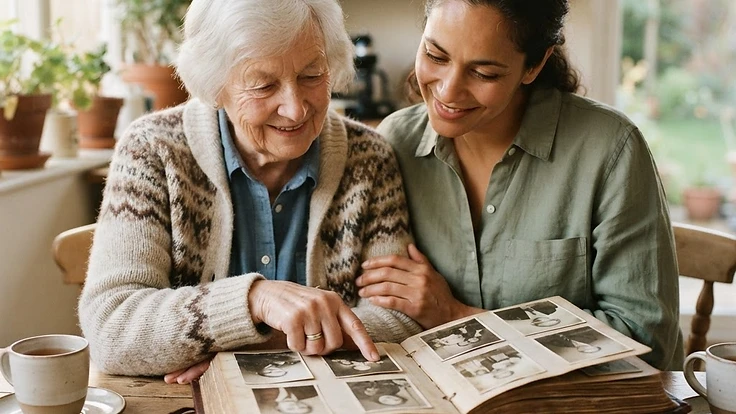
For someone living with dementia, the world can feel unpredictable and confusing. Familiar routines provide an anchor. They reduce anxiety, prevent confusion, and help the person feel a sense of control over their day.
In-home dementia care supports these routines in ways that facilities often cannot, because the caregiver comes to the person, in the home they know, surrounded by the objects and memories that give them comfort.
Why Routines Matter for Dementia
The National Institute on Aging notes that people with dementia benefit from predictable daily routines. Here is why:
- ✓Reduced anxiety. When the day follows a predictable pattern, there is less uncertainty to cause anxiety and agitation.
- ✓Better sleep. A consistent daily routine, including regular wake times, meals, and activity, helps regulate the sleep-wake cycle.
- ✓More independence. When tasks happen in the same order each day, the person can often do more of them independently because the routine itself provides cues.
- ✓Fewer behavioral issues. Unpredictable changes can trigger agitation, aggression, or wandering. Routines reduce these triggers.
- ✓Easier transitions. When care tasks like bathing happen at the same time each day, resistance decreases because the person knows what to expect.
What a Dementia-Friendly Routine Looks Like
A good routine for someone with dementia is:
- ✓Consistent. The same activities happen at roughly the same time each day.
- ✓Simple. The routine has clear, easy-to-follow steps.
- ✓Flexible. While the structure is consistent, the caregiver can adjust the pace based on how the person is feeling that day.
- ✓Meaningful. The routine includes activities that the person enjoys and that give them a sense of purpose.
A typical daily routine might look like this:
Morning
- ✓Wake up at the same time
- ✓Use the bathroom and wash
- ✓Get dressed (with help as needed)
- ✓Eat breakfast
- ✓Take morning medications
- ✓Engage in a preferred activity: reading the paper, listening to music, or a short walk
Midday
- ✓Eat lunch
- ✓Rest or nap
- ✓Engage in an activity: folding laundry, gardening, or looking at photos
- ✓Take afternoon medications
Evening
- ✓Eat dinner
- ✓Relaxing activity: watching a familiar show or listening to music
- ✓Use the bathroom and wash
- ✓Change into nightclothes
- ✓Go to bed at the same time
How In-Home Care Supports Routines
Consistency of Caregiver
In-home care allows for consistent caregiver assignments. When the same caregiver comes at the same time each day, your loved one builds trust and familiarity. This is especially important for someone with dementia, who may be confused or frightened by new faces.
Familiar Environment
The caregiver comes to your loved one's home, not the other way around. Your loved one stays in the environment they know, with their own furniture, their own kitchen, and their own bathroom. This reduces disorientation and anxiety.
Personalized Routine
A caregiver can follow the routine your loved one has had for years, not a facility schedule. If your loved one has always had coffee at 6 AM and breakfast at 8, the caregiver can follow that schedule. If they have always watched the evening news at 5:30, the caregiver can make that part of the routine.
Gentle Guidance
A caregiver trained in dementia care knows how to guide your loved one through the routine without rushing or pressuring. They use cues and prompts rather than commands. They allow time for each step. They adjust the pace based on how the person is feeling.
Activity and Engagement
A caregiver can build meaningful activities into the routine: walks, games, music, gardening, or simply conversation. These activities reduce boredom and restlessness, which in turn reduces behavioral issues.
Maintaining Routines as Dementia Progresses
As dementia progresses, routines may need to be simplified. Tasks that were once independent may require more help. The caregiver can adjust the routine gradually:
- ✓Early stage: The caregiver may mainly provide companionship and help with complex tasks like cooking and medication management.
- ✓Middle stage: The caregiver helps with more daily activities like bathing and dressing, while encouraging independence where possible.
- ✓Late stage: The caregiver provides comprehensive support with all daily activities, while maintaining the structure of the routine.
The key is that the structure of the day remains predictable even as the level of help changes.
When Routines Are Disrupted
Disruptions to routine can cause significant distress for someone with dementia. Common disruptions include:
- ✓Hospital stays or medical appointments
- ✓Changes in caregiver or schedule
- ✓Holidays or family gatherings that change the daily pattern
- ✓Daylight saving time changes
- ✓Moving to a new home or facility
A caregiver can help minimize the impact of disruptions by maintaining as much of the routine as possible during the disruption and returning to the normal routine as quickly as possible afterward.
For more on helping a loved one through transitions, see our article on hospital-to-home recovery.
The Role of Family
Family members are an important part of the routine. Regular visits, phone calls, and shared meals provide additional structure and connection. A caregiver can help coordinate family involvement so it fits naturally into the daily routine.
For more on family caregiving, see our article on creating a family caregiving schedule.
The GUIDE Program
If your loved one is enrolled in Medi-Cal and has a dementia diagnosis, the GUIDE program may provide additional support for maintaining routines, including care coordination and caregiver support. See our GUIDE dementia care program page for more.
A Final Note
Routines are not about rigid schedules. They are about creating a predictable, comforting rhythm to the day that helps your loved one feel safe and oriented. In-home dementia care supports this in a way that is difficult to replicate in any other setting.
If you would like help caring for a loved one with dementia, Healthy at Home offers a free care assessment. Our dementia-trained caregivers can help create and maintain routines that reduce anxiety and support quality of life.
Healthy at Home Caregivers
Educational resource for families and caregivers
Could your loved one use more support at home?
Healthy at Home provides personalized non-medical home care designed around your family's schedule and needs.
Learn About Home CareNeed more support at home?
Every family's situation is different. Healthy at Home can help you understand your options and build a care plan that fits your loved one's needs.
Prefer to talk? Call (949) 340-2617